
In the world of cloud-native applications, securing traffic with TLS/SSL is non-negotiable. But deciding where to decrypt that traffic at the ingress controller or at the backend can be tricky. Should you terminate TLS at the edge for rich routing and inspection, or keep encryption end-to-end for maximum security? Spoiler: sometimes you do both.
Table Of Content
- What Are TLS/SSL Termination and Passthrough?
- TLS/SSL Termination
- TLS/SSL Passthrough
- Real-World Use Cases
- When to Use TLS/SSL Termination
- When to Use TLS/SSL Passthrough
- Practical Configuration Notes
- Verification & Troubleshooting
- Pros and Cons
- Decision Checklist
- Traffic Flow Diagram (Textual)
- Case Scenario: Hybrid Application Using Both TLS Termination and Passthrough
- Application Description
- Why Use Both?
- Simple Flow
- Sample Configuration Snippets
- Security & Operational Rationale
- Verification Steps
This post breaks down the essentials of Passthrough vs TLS/SSL Termination, and adds a real-world case scenario where both modes coexist in a single application architecture.
- TLS/SSL Termination: Decrypts traffic at ingress (Layer 7), enabling advanced routing, WAF, and centralized cert management.
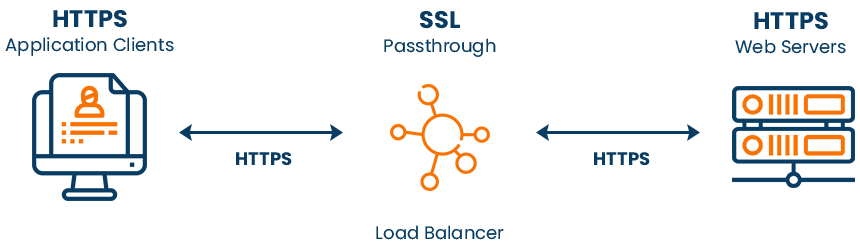
- TLS/SSL Passthrough: Forwards encrypted traffic directly to backend (Layer 4), preserving end-to-end encryption.
- Use termination for rich L7 features and centralized certs.
- Use passthrough when backend services require mTLS or custom TLS handling.
- Some applications benefit from both modes simultaneously for different components.
What Are TLS/SSL Termination and Passthrough?
TLS/SSL Termination
This is when the ingress controller (or load balancer) decrypts the incoming TLS/SSL traffic at the edge (layer 7). The controller holds the TLS certificates and keys, terminates the encrypted connection, and then forwards the decrypted HTTP traffic to backend services. This allows the controller to inspect HTTP headers, perform routing based on host/path, apply WAF rules, etc.
TLS/SSL Passthrough
In passthrough mode, the ingress controller does not decrypt the TLS traffic. Instead, it forwards the encrypted traffic directly to the backend service (layer 4). The backend service is responsible for terminating TLS. This means the ingress controller cannot inspect HTTP headers or perform L7 routing decisions on the encrypted traffic.
| Feature | TLS/SSL Termination (L7) | TLS/SSL Passthrough (L4) |
|---|---|---|
| Decryption Point | Ingress controller | Backend service |
| Routing Layer | Layer 7 (HTTP) | Layer 4 (TCP) |
| Host/Path Routing | Yes | No |
| Certificate Location | Ingress controller | Backend service |
| Health Checks | HTTP or TCP | TCP only |
| Logging | Full HTTP logs | TCP connection logs only |
| Advanced Features | WAF, rate limiting, header mods | Limited to TCP load balancing |
| mTLS Support | Possible at ingress | Backend handles mTLS |
| Requires CRDs | Optional | Yes (controller.enableCustomResources) |
Real-World Use Cases
When to Use TLS/SSL Termination
- Centralized certificate management.
- Path or host-based routing.
- WAF, rate limiting, header manipulation.
- Detailed HTTP logging and monitoring.
When to Use TLS/SSL Passthrough
- Backend services require mutual TLS (mTLS).
- True end-to-end encryption is mandatory.
- Simple routing based on IP/port or SNI.
- Avoid duplicating certificates on ingress.
Practical Configuration Notes
- Enable passthrough with
enableTLSPassthrough: true(orenableSSLPassthrough: true). - Must enable
controller.enableCustomResources: truefor CRDs. - Passthrough usually listens on port 443.
- Certificates live on backend services for passthrough; on ingress for termination.
Verification & Troubleshooting
- Confirm passthrough enabled in ingress controller config.
- Use
openssl s_client -connect yourdomain.com:443to verify cert source. - Check logs: passthrough shows TCP connections only; termination shows HTTP logs.
- Ensure backend services respond to TCP health checks.
- Verify SNI routing if used.
Pros and Cons
| Pros (Passthrough) | Cons (Passthrough) |
|---|---|
| True end-to-end encryption | No L7 routing or inspection |
| Backend controls TLS/mTLS | Limited ingress controller features |
| Simplifies ingress cert management | Limited health checks and logging |
| Pros (Termination) | Cons (Termination) |
|---|---|
| Rich L7 routing and inspection | Backend must trust ingress controller |
| Centralized cert management | Potentially less secure end-to-end |
| Full HTTP logging and WAF support | More ingress controller complexity |
Decision Checklist
- Need path or host-based routing? → Termination
- Require mTLS at backend? → Passthrough
- Want centralized cert management? → Termination
- Need end-to-end encryption without ingress decryption? → Passthrough
- Want WAF, rate limiting, header mods? → Termination
- Is your ingress controller configured with CRDs enabled? → Required for passthrough
Traffic Flow Diagram (Textual)
TLS/SSL Termination:
Client → (Encrypted TLS) → Ingress Controller (Decrypts TLS) → (Plain HTTP) → Backend Service
TLS/SSL Passthrough:
Client → (Encrypted TLS) → Ingress Controller (Forwards encrypted traffic) → Backend Service (Decrypts TLS)
Case Scenario: Hybrid Application Using Both TLS Termination and Passthrough
Application Description
Imagine a financial SaaS platform with two main components:
- Public API Gateway:
- Handles user-facing REST API calls.
- Requires path-based routing, WAF, rate limiting, and centralized certificate management.
- TLS terminated at ingress for rich L7 features.
- Internal Payment Processing Service:
- Handles sensitive payment transactions.
- Requires strict mutual TLS (mTLS) authentication and end-to-end encryption.
- TLS passthrough to backend service for backend-managed certs and mTLS.
Why Use Both?
- The API Gateway benefits from ingress TLS termination to apply security policies and route requests efficiently.
- The Payment Service demands end-to-end encryption and mTLS, so passthrough ensures ingress does not decrypt or interfere with sensitive traffic.
Simple Flow
Client
  │
  │ TLS (443)
  ▼
Ingress Controller
  ├─ TLS Termination (port 443) → API Gateway Service (HTTP)
  │      (WAF, routing, certs at ingress)
  │
  └─ TLS Passthrough (port 443) → Payment Processing Service (TLS)
         (mTLS, backend certs, end-to-end encryption)
Sample Configuration Snippets
Ingress Controller Config (values.yaml or similar):
controller:
  enableCustomResources: true
  enableTLSPassthrough: true
Ingress Resource for API Gateway (TLS Termination):
apiVersion: networking.k8s.io/v1
kind: Ingress
metadata:
  name: api-gateway-ingress
spec:
  tls:
  - hosts:
    - api.oladapo.cloud
    secretName: api-gateway-tls-secret
  rules:
  - host: api.oladapo.cloud
    http:
      paths:
      - path: /v1/
        pathType: Prefix
        backend:
          service:
            name: api-gateway-service
            port:
              number: 80
Ingress Resource for Payment Service (TLS Passthrough):
apiVersion: networking.k8s.io/v1
kind: Ingress
metadata:
  name: payment-service-ingress
  annotations:
    nginx.ingress.kubernetes.io/ssl-passthrough: "true"
spec:
  rules:
  - host: payments.oladapo.cloud
    tcp:
      paths:
      - backend:
          serviceName: payment-service
          servicePort: 443
Note: Actual syntax depends on ingress controller (e.g., NGINX, Traefik). The key is enabling passthrough annotation and CRDs.
Security & Operational Rationale
- API Gateway:
Centralized certs simplify management; ingress can inspect and block malicious traffic early. - Payment Service:
Backend controls certs and mTLS policies, ensuring compliance with strict financial regulations. - Operational:
Enables separation of concerns security policies at ingress for public API, strict encryption and auth at backend for sensitive data.
Verification Steps
- Check ingress controller config:
ConfirmenableTLSPassthrough: trueandcontroller.enableCustomResources: true. - Test API Gateway TLS termination:
openssl s_client -connect api.oladapo.cloud:443
Certificate should be the ingress controller’s cert. - Test Payment Service TLS passthrough:
openssl s_client -connect payments.oladapo.cloud:443
Certificate should be the backend payment service’s cert. - Inspect logs:
- API Gateway traffic shows HTTP logs, WAF events.
- Payment Service traffic shows TCP connection logs only at ingress.
- Health checks:
Ensure backend payment service responds to TCP health checks. - mTLS validation:
Confirm mutual TLS handshake succeeds between client and payment service.
By understanding the trade-offs and capabilities of TLS/SSL termination and passthrough, architects and engineers can design secure, scalable, and compliant systems that meet diverse operational needs. Whether you are managing a simple microservice or a complex financial platform, mastering these concepts is key to building resilient and secure cloud-native applications.